

Within The Womb

376_WITHIN THE WOMB.jpg

The topic of abortion has been a hotbed issue in America ever since Row v Wade. Today, the liberal culture not only values abortion, but it celebrates it, spinning what is clearly evil into the guise of women’s healthcare and women’s rights. It is viewed as progressive and victimless resting on the idea that the unborn are un-alive. As our nation continues to play God, claiming the authority to end pregnancies, believers need to remember what the Bible says about life within the womb. The most common biblical argument supporting God’s sovereignty and the notion that life begins in the womb comes from Psalm 139, verse 13 which says: “For you created my inmost being; you knit me together in my mother’s womb.” But I wanted to highlight a couple of verses in Luke that are just as compelling. Concerning God’s sovereignty when it comes to the unborn, it says this concerning John the Baptist in Luke, chapter 1, verse 15:

“…for he will be great in the sight of the Lord. He is never to take wine or other fermented drink, and he will be filled with the Holy Spirit even from birth.” 

God had a plan for John even before he was born, and I believe he has a plan for ever unborn child. And with every abortion, his sovereign plan is subverted. As to biblical evidence of life beginning within the womb, it goes on to say in verse 41:

“When Elizabeth heard Mary’s greeting, the baby leaped in her womb, and Elizabeth was filled with the Holy Spirit.” 

So, even before being born John the Baptist was alive and active within the womb. Through the Holy Spirit he was able to sense Mary who was pregnant with Jesus. It says he “leaped in her womb”. Dead tissue cannot do that. Even today, women feel the baby moving, kicking and reacting to outside stimulus within the womb. To claim that the unborn is not living, should not be protected and doesn’t have rights is not ignorance, it is selfishness. Because I would argue that it is impossible, with all of the scientific evidence we have, to believe that the unborn is not alive.

—-

There is biblical evidence supporting the truth that the unborn is not only living, but worth protecting. And I believe that the scientific evidence we’ve gained over the years is even more compelling. Yet, our culture still seems to ignore the facts. We seem to want to take on the role of God and decide that only those children who are wanted should be born, and those who are not wanted should be aborted. This is the pinnacle of selfishness. Jesus said that “greater love has no one than this: to lay down one’s life for one’s friends.” If this is the greatest display of love, then how should we define one who is willing to lay down the life of a child so that their life will not be disrupted?
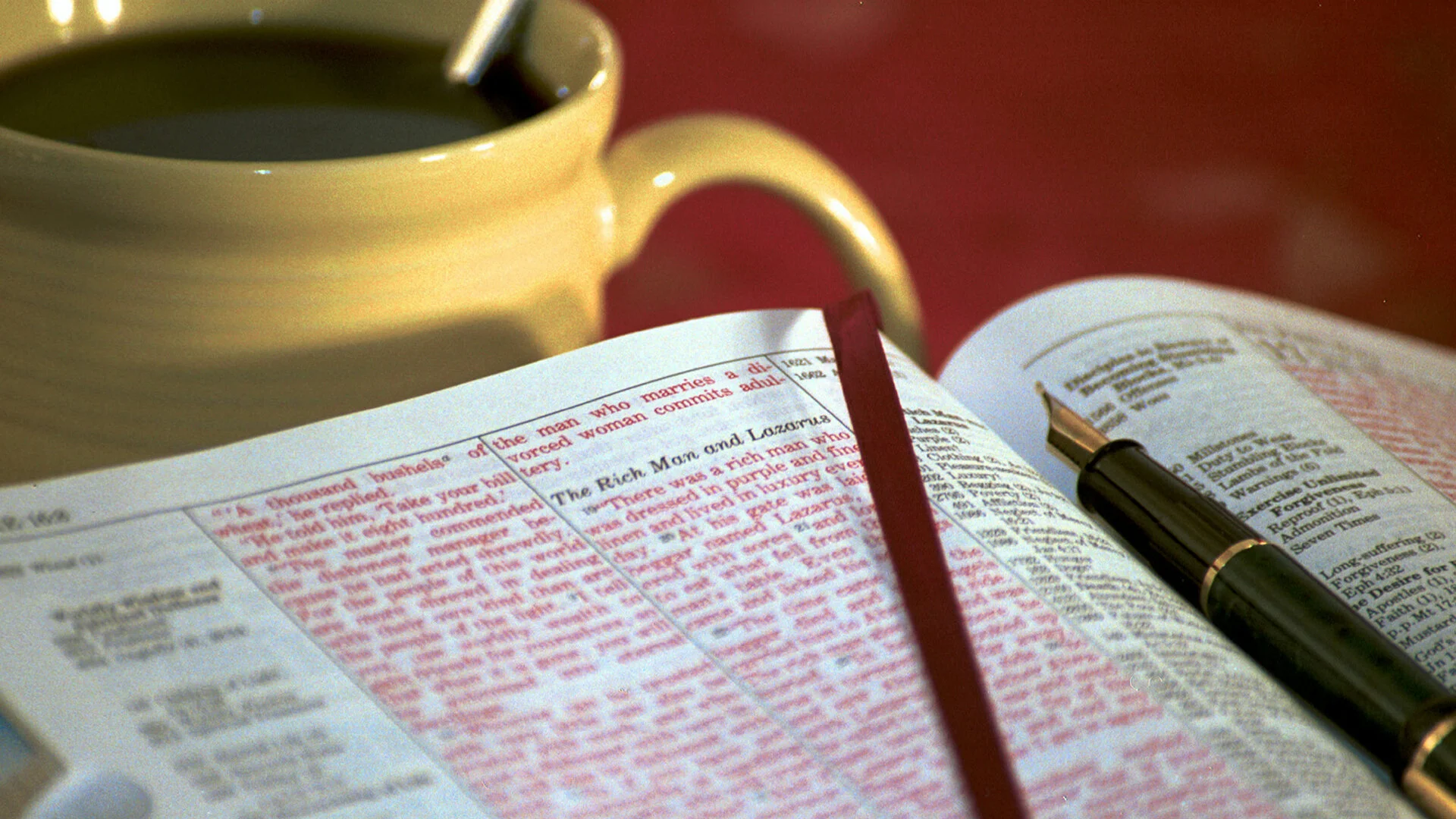

Examine The Scriptures

375_EXAMINE THE SCRIPTURES.jpg

There is so much we can learn from the early church of the Bible. Though many were new converts to the Christian faith, for many things, they instinctively knew what to do. For many things, the Holy Spirit helped them discern what is right. One example of this is when Paul preached to the Bereans. Even though they accepted Paul, and the message he brought with him, they were diligent in examining the word for themselves to see if what Paul was saying was, indeed, accurate. It says in Acts, chapter 17, verse 11: 

“Now the Bereans were of more noble character than the Thessalonians, for they received the message with great eagerness and examined the Scriptures every day to see if what Paul said was true.” 

If you are an American believer, there is a good chance that you own a copy of the Bible. Many of us own several copies of the Bible. We may even own several versions of the Bible along with a variety of commentaries to help us to better understand them. Today, we can even read the Bible on our phones, or have it read to us through an app. However, even with such access to the Holy Scriptures, how many of us are reading the Bible for ourselves? How many of us are checking the scriptures to make sure that what we hear in church, or what we’ve been taught by our parents, lines up with scripture? The Bereans had the right idea. Acts says that they examined the Scriptures every day to see if what Paul said was true. They didn’t just take his word for it. We shouldn’t blindly accept the words of our pastors either, because we have the Bible and we have the Holy Spirit to discern if what we are being taught is true. So I would encourage you to familiarized yourself with the entire Bible. Because hearing a good word from your pastor is only as good as how true and accurate those words are.

—-

I’m not sure if Americans revere the Bible as much as we should. If we are able to truly understand that it is the inspired word of God, we may begin reverence it as much as the underground Chinese churches do. I used to be an area representative for “Voice of the Martyrs” and I remember seeing a video smuggled out of one of the underground Chinese churches showing several Chinese believers receiving their very own copy of the Bible. When each person received their copy, they held it close to their chest and began weeping silently because they will now be able to read the word of God for themselves. I challenge you to test what is being taught; to revere the word of God, and to read the scriptures for yourself. Being fed the scriptures by our pastors is of some value, but I would argue that it is even more important for us to feed ourselves.

Correction

374_CORRECTION.jpg

I like the sentiment behind the phrase, “we learn from our mistakes”. Because when we make a mistake and are corrected, or even disciplined, our minds are able to catalogue the experience in a way that almost shoots up a “danger” sign when we are about to make the same mistake again. And since we have been disciplined, or corrected, the reminder of our punishment helps us to know what might happen if we choose to take the incorrect path. But, if we are always able to do right, we miss out on the training, or knowledge, we gain from failing. We don’t quite understand, the same way we might if we made the mistake, what consequences arise when we fail. So we are left unaware of the danger. It is kind of like when we were children and we didn’t know the dangers of fire. If we were able to experience the pain of touching fire, we would know why it is dangerous. But if we never experienced the pain of the fire, we may remain unaware of its power. That is why it says in Proverbs chapter 12, verse 1: 

“Whoever loves discipline loves knowledge, but he who hates correction is stupid.” 

It would be to our benefit if, as a species, we’d always learn from our mistakes. But there are some who reject correction. This proverb labels those individuals “stupid”, because they either resist the truth, or invite the consequences. Believers should take this proverb to heart. We should love, or at least value, discipline because if we do, we will learn from our mistakes. We should not be resistant, or hate, correction because if we do, we haven’t learned a thing.

—-

Discipline is not only meant to correct, or punish us, it is meant to teach us. And if we value discipline, we will be wise. I can attest that when I was a child and was punished by my parents, I thought they enjoyed giving me what I deserved, as if it were a mechanism for them to take their anger out on me. But now that I’m older, I understand that the main goal of their punishment was that I would learn and not make the same mistake again. So I would encourage you, as this proverb does, to love discipline. That is one way we can grow. That is one way we are able to allow the Holy Spirit to mold us into the people we are meant to be. Because if we are resistant, we are only being stupid.

Sending You

373_SENDING YOU.jpg

We are all unique beings, created by God for his pleasure. He gave us varying talents, passions and abilities that we can use to serve him. And we all have different personalities, different experiences, and different demographics that make us who we are. But, no matter where you live, no matter what language you speak, and no matter how rich or poor you are, we are all called to evangelize. We all have a mission to shine a light on Jesus and to invite others into the kingdom of which we are so blessed to be a part. It may sound like a “big ask”, but he is asking all the same. In John, chapter 20, verse 21, after Jesus rose from the dead and met with his disciples, he said this before he would ascend to the Father: 

“Again Jesus said, ‘Peace be with you! As the Father has sent me, I am sending you.’” 

Jesus said this directly to his disciples, and all of them obeyed and went wherever they were sent. They made it their mission to spread the good news of Jesus Christ. Today, we have that same mission. Much of what is written in the Bible as commands and mandates for those it addressed, is also meant for us as well. Jesus said to his disciples, “as the Father has sent me, I am sending you.” And as an extension, he is also saying that to us. So I would encourage you to obey. Be creative. Examine the personality, talents, passions and opportunities that God has given you, and ask the Holy Spirit to show you how you can use them to carry out this mandate. Give it thoughtful consideration, because as you can see in John 20, Jesus is sending each and every one of us.

—-

You do not have to wait to hear the audible voice of God, or spiritually discern through fasting and prayer whether you should make it your mission to share Christ with others, because John reminds us that we are all being sent; each and every one of us. The question is, will you go? It is easy for us to pray to God in haste and say that we will do whatever he asks of us. But will we answer the call? If you are ready, he is asking. I believe that there are two modes of evangelism; opportunities that God brings to us, and opportunities that we carefully plan an execute on our own, or in partnership with others. In either case, we should purpose to be in step with the Spirit so that he guides us in our task. So I encourage you to pray today, and ask God where is he sending you. The answer may set you on a path that will change the course of your entire future.

Corporate Prayer

372_CORPORATE PRAYER.jpg

How often do you engage in corporate prayer? By “corporate prayer”, I’m referring to the practice of several believers coming together to pray to God. It could be a scheduled, ongoing, practice or it could be a special gathering appealing to God concerning an urgent matter. These prayers are usually prayed allowed so that others can hear them and agree with them during the prayer. As one person ends their prayer, others can offer theirs allowed as well. If you are not participating in some form of corporate prayer, I would encourage you to give it a try. Because I believe that corporate prayer is one of the more effective ways to get God’s attention, and I’m sure the early church would agree. In Acts, chapter 12, King Herod set forth a campaign to kill and persecute Christians. In the opening verses of the chapter, we learn that he killed James and imprisoned Peter. Then in verse 5 it says:  

“So Peter was kept in prison, but the church was earnestly praying to God for him.” 

It goes on to say that the night before Herod was going to bring Peter to trial, God sent an angel to rescue him in a miraculously way. In a recent sermon, my pastor said that God chooses to handcuff himself to the church. In other words, there are some things that God may want to happen on earth, but he may not move unless we, his vessels, work in concert with his plans through prayer and action. God miraculously rescued Peter from prison. But would he have done so without the earnest prayers of the church? I’m inclined to believe that he wouldn’t have. I believe that Peter would’ve been put on trial and may have been executed much the same as James was. But it was the prayers of the church that motivated God to set his angel to flight and answer the prayers of his people. How many negative events, calamities and situations might have been avoided in your church, community or country if the body of Christ would’ve come together in corporate prayer? I believe that we’ve forgotten the power of prayer. I attend a large church, but our weekly prayer group only draws about three to five people. I believe that the worldwide body of Christ needs to take corporate prayer seriously, and loosen the hands of God so that he will move miraculously on behalf of his people. You and I can be a part of that effort. So I encourage you to consider participating in the corporate prayers of your church, small group, or prayer teams and see if God will not move in a mighty way.

—-

When it comes to affecting change in our world, there is power in numbers. This is true for protests, fundraising, voting, wars, and the list goes on. I would suggest the same is true when we want to affect change in the spiritual realm. The Bible reminds us that where two or three are gathered together in his name, he is right there in their midst. Why do you think it says that? I believe it serves as a reminder of this truth. We need to come together and pray, much like the early church in Acts, and we need to do it often. I believe that on a whole, our individual and corporate prayer practices are anemic. We need to model the early church, and corporate prayer is one such way.